
The Menstrual Cycle

© wix.com
The menstrual cycle is an integral part of a menstruator’s everyday life - affecting energy levels, mood, sex drive and overall health. Observing and understanding the different phases can give you deeper insights into your own fertility and help you to make informed decisions.
Knowing when to expect certain changes and how those changes look for you, can help to plan routines and events. Furthermore, this knowledge is a powerful tool to time intercourse, whether you want to plan or prevent a pregnancy.
Behind this recurring process is a remarkable interplay of many organs. Below, we will dive deeper into the events and characteristics of each phase. In daily language the menstrual cycle is divided into four phases - menstruation, follicular phase, ovulation and luteal phase. After reading this article you will be able to explain the two main phases which are follicular phase and luteal phase and the role of the two main actors in every cycle, estrogen and progesterone.
Role of the menstrual cycle
The main event of each menstrual cycle is the preparation for a possible pregnancy which involve hosting sperm, ovulation and changes in the uterine lining.
This processes are managed by several hormones. Simultaniously, they play an important role in the menstruator's physical and overall wellbeing.
Ovulation
Ovulation is a key event in every menstrual cycle and also marks a certain turning point, as most biomarkers appear differently before and after ovulation. Fertilisation can also only occur once ovulation has taken place. Ovulation is the result of a chain reaction involving four hormones, which are produced either in the brain or in the ovaries.
The main actors are produced in the ovaries and are called
Estrogen og
Progesterone.
The pituitary gland (a part of the brain) produces
FSH (follicle-stimulating hormone)
LH (luteinizing hormone).
Here, you can read in depth about ovulation.
Beginning of the menstrual cycle
Nevertheless, ovulation is less obvious to track than the menstrual bleeding. Therefore a menstrual cycle is defined to always start on the first day of menstruation and to end on the day before the next menstruation. A new cycle always starts in response to the internal message „no pregnancy detected“ in the previous cycle.
The first day of menstruation is the first day with fresh, red blood flow and the need for hygiene products. Many menstruators experience spotting one or two days before the menstrual blood flow starts and those days are still considered part of the previous cycle.
Cycle length
A healthy menstrual cycle lasts between 23 and 35 days. Very often, educational charts and resources equate a healthy menstrual cycle with a cycle that always lasts for 28 days. Several studies have shown that only about 13% of all cycles are exactly 28 days long.
The study from Soumpasis, Grace, Johnson, 2020 shows that fewer than 1% of menstruators have the same cycle length in four consecutive cycles, but 52% experience a variation of cycle length of 5 days or more in four consecutive cycles.
Influences on the cycle length
Variations in the length of the menstrual cycle can be explained by long-term factors and short-term influences.
Factors such as age and an individual's overall hormonal balance have a long-term effect on the length of the menstrual cycle. On the other hand, variable factors like stress, illness, changes in routine, travel, medication or physical strain cause immediate effects that are usually only seen in the current cycle.
The days leading up to ovulation are more sensitive to influences, which is reflected in the total length of the cycle. Oestrogen production slows down, and it takes longer to reach the threshold that triggers ovulation. This process is described in more detail below.
Any menstruator's cycle is always based on the same process - no matter the length:
no pregnancy ➜ prepare ovulation ➜ ovulation ➜ prepare pregnancy
➜ no pregnancy = clean up and prepare again ovulation
Information flow in the body
Exchange of information in the body is based on constant communication between the brain, ovaries, and uterus, also known as the hypothalamic-pituitary-gonadal axis (HPG-axis) (for an indepth explaination of its function, read more here).
During each menstrual cycle, three communication paths are running simultanously, all managed by the main actors estrogen and progesterone:
Hereafter, these cycles are described separately; however, in reality they cannot be seperated as they are deeply intertwined in their functioning and being linked to the same hormones.
The cycle as a chart
This table shows the changes in the ovaries and the uterus, as explained below. It also shows the changes in four hormones: estrogen, progesterone, LH and FSH.

The ovarian cycle
The ovarian cycle is referring to the hormone production which is happening in the ovaries.
It divided into two characteristic phases - follicular phase and luteal phase.
The follicular phase begins on the first day of the cycle and ends with ovulation. The luteal phase begins with ovulation and ends with the onset of the next menstruation.

The ovarian cycle - Follicular phase
The follicular phase begins with rising levels of FSH which stimulate a group of ovarian follicles, called cohort, to mature and aim for ovulation.
As the follicles mature, they compete with each other for becoming the dominant follicle.
The first follicle that becomes fully mature begins to produce large amounts of estrogen which inhibits the growth of the other competing follicles.
The single follicle that reaches full maturity during this process and will be the one to be released during ovulation is referred to as the Graafian follicle. The Graafian follicle continues to produce estrogen.
As estrogen levels rise, they eventually surpass a threshold level, at which point they stimulate LH production, resulting in a spike in LH levels. Simultaniously, FSH level rise again for a short time.
The high amounts of LH cause the membrane of the Graafian follicle to become thinner and easier to break.
Within 24-48 hours of the LH surge, ovulation happens: The follicle ruptures and releases the egg cell.
Next, the egg cell is released from the ovary and caught by the fallopian tube via fimbriae (finger-like structures).
The ovarian cycle - Luteal phase
Once ovulation has occurred LH and FSH stimulate the follicular tissue remaining of the Graafian follicle to develop into the corpus luteum („yellow body“), which gives the name to this phase.
The corpus luteum produces the hormone progesterone.
In the absence of fertilisation, the corpus luteum survives 10-12 days before it begins to regress. With the onset of regress progesterone and estrogen levels drop sharply resulting in the onset of menstruation and the start of a new cycle.
Simultaniously, triggered by the sudden drop in progesterone and estrogen, FSH levels increase slightly. It is this small spike in FSH that is expected to be the stimulus for a new cohort of follicles to begin development.
The duration of the luteal phase is notably consistent, typically lasting 12 to 16 days, regardless of the overall cycle length.
If fertilisation occurs
When an egg cell is fertilised, it starts to produce increasing amounts of hCG (human chorionic gonadotropin).
hCG is needed to maintain the pregnancy as it prevents the degeneration of the corpus luteum which in return continues the production of progesterone and inhibits menstruation.
Once the placenta has reached maturity (from around 8 weeks gestation) it eventually takes over the roles of hCG and the corpus luteum.
Home pregnancy tests measure whether hCG is present and show positive when a certain threshold has reached. hCG levels increase with the duration of the pregnancy and might not always be detectable by a home pregnancy test in the early days.
For a detailed explaination of fertilisation, read here.
The uterine cycle
The uterus has its own cycle, which is driven by same cyclical release of estrogen and progesterone as discussed in the ovarian cycle.
The inside lining of the uterus is called endometrium and is composed of two layers:
-
Functional layer: it grows thicker in response to estrogen and progesterone and is shed during menstruation
-
Basal layer: it forms the foundation from which the functional layer develops and is not shed.
.png)
The uterine cycle has three phases known as the menstrual, proliferative and secretory phases.
The uterine cycle - Menstrual phase
At the end of the luteal phase, if no implantation has occured, the corpus luteum degenerates.
The loss of the corpus luteum results in decreased progesterone production.
The decreasing levels of progesterone cause the spiral arteries in the functional endometrium layer to contract and restrict blood and oxygen supplies. As a result, the functional layer is shed and exits through the vagina as menstruation.
The uterine cycle - Proliferative phase
During the proliferative phase, increasing levels of estrogen stimulate repair and growth of the functional layer, allowing recovery after the recent menstruation. This involves increasing endometrial thickness, vascularity and the number of secretory glands.
The uterine cycle - Secretory phase
The secretory phase begins once ovulation has occurred.
During this phase, due to rising levels of progesterone the functional endometrium layer develops into a supportive and nutricious environment that is receptive to implant a fertilised egg cell.
If implantation occurs and an embryo develops, the functional layer matures in the placenta (that takes about 8-10 weeks), which eventually becomes the main actor in maintaining the pregnancy.
The cervical cycle
The cervix is the connecting part between uterus and vagina. Its inside opening is called the cervical canal.
The cervical canal is lined by gland-like dents, called crypts, which produce cervical mucus.
Cervical mucus is discharged through the vagina and can be seen and/or felt by the menstruator. It consists mostly of water, nutricious components like sugars, minerals and proteins, enzymes and white blood cells.
.png)
Like in the ovarian and uterine cycle, the events in the cervical cycle are mainly influenced by estrogen and progesterone levels.
The cervical cycle - Fertile mucus phase
Rising levels of estrogen before ovulation increase the quantity of mucus as well as the consistency due to a higher water content so it becomes more transparent and elastic.
The pre-ovulatory mucus plays an essential role in the viability of sperm as it enhances agility, provides nutrition and serves as a filter for the strongest sperm. Additionally, vaginal pH changes to be more neutral which is crucial for sperm survival.
Protected by this fertile environment, sperm can live up to 5 days and await ovulation.
The cervical cycle - Clogged cervix phase
Due to rising progesterone levels and decreasing estrogen levels shortly after ovulation, the mucus’ structure is changing into a dense clog which provides an effective barrier to sperm cells.
Simultaniously, the vaginal pH lowers or becomes more acidic which creates a hostile environment for sperm survival.
During menstruation the clog exits with the blood flow, however depending on the hormone levels after menstruation it might form again and prevent sperm from entering the cervix while estrogen levels are low.
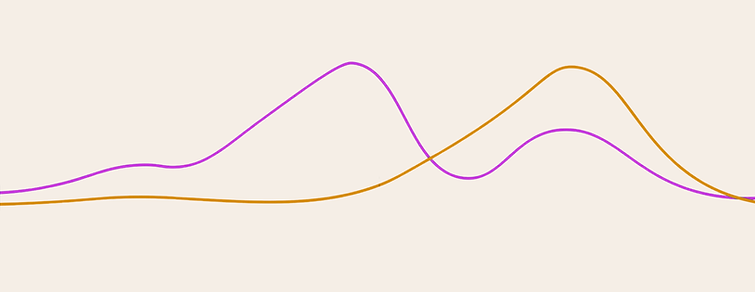
Summary of hormonal influences
.png)
Estrogen - produced mainly in the follicle that ruptures during ovulation
-
restores of functional endometrium layer after menstruation
-
increases quality and quantity of cervical mucus
-
changes vagina into a viable environment for sperm
Progesterone - produced by the remains of follicular tissue after ovulation
-
enhances the functional endometrium layer into a nutrionrich and supportive environment
-
thickens cervical mucus
-
changes vagina into a hostile environment for sperm
-
increases basal body temperature (not part of the discussion above)
Sources
Last updated: May 9th, 2026